
What is Ashtanga Yoga?
Traditionally taught as a self‑practice, students learn the sequence gradually, receiving new postures only when they’re ready. This steady, “drip‑fed” approach builds strength, stamina, confidence, and resilience at a pace that suits your body.
Practised mindfully, Ashtanga is grounding and helps regulate the nervous system. This is the traditional method of learning Ashtanga yoga.
Beginners- next course starts 3rd November
Looking to start an Ashtanga practice?
There are two ways to begin an ashtanga practice:
- Book a block of 1:1 sessions for individual attention or
- Book a 4 week beginners course.
- Beginners are always welcome to any of the Mysore classes. It is advisable to sign up for a 5 class pass and then you'll get a bit of continuity to learn a short practice.
Beginner's courses run alongside the Mysore classes are on
Tuesdays, at 6pm at Central Methodist Hall Manchester.
Over 4 weeks You will be guided step by step through the beginnings of the primary series.
You’ll learn postures in small, manageable chunks, giving you the time and space to fully absorb each movement.
Repetition of postures is encouraged, helping you commit them to memory while gently building stamina and opening your body to the practice.
At the end of each week you’ll have a short sequence of postures that you can confidently practice at home or in class, building every week until by the end of 5 weeks you'll have the standing postures and some of the seated postures.
This foundation will set you up to grow your practice over time, adding more postures as you progress—just as Ashtanga yoga is traditionally taught.
Learning in this way is suitable for everyone, no matter your age or fitness level.
Next Beginner's course starts on 2nd September
Weekly Classes
I teach Mysore‑style Ashtanga yoga in central Manchester.
- Tuesdays, 5:30pm – Central Methodist Hall, Central Manchester
This class suits all levels, as the practice is adapted to your pace and experience.
You practice to where you remember and new postures are added when you're ready.
Often likened to a private class in a group setting, this is an ideal class to move your practice on and receive individual attention when needed.
If you are used to guided classes there are cheat sheets available and you'll be surprised how much you can remember.
Beginners and advanced practitioners are equally welcome — this method supports steady, personalised progression.
Workshops
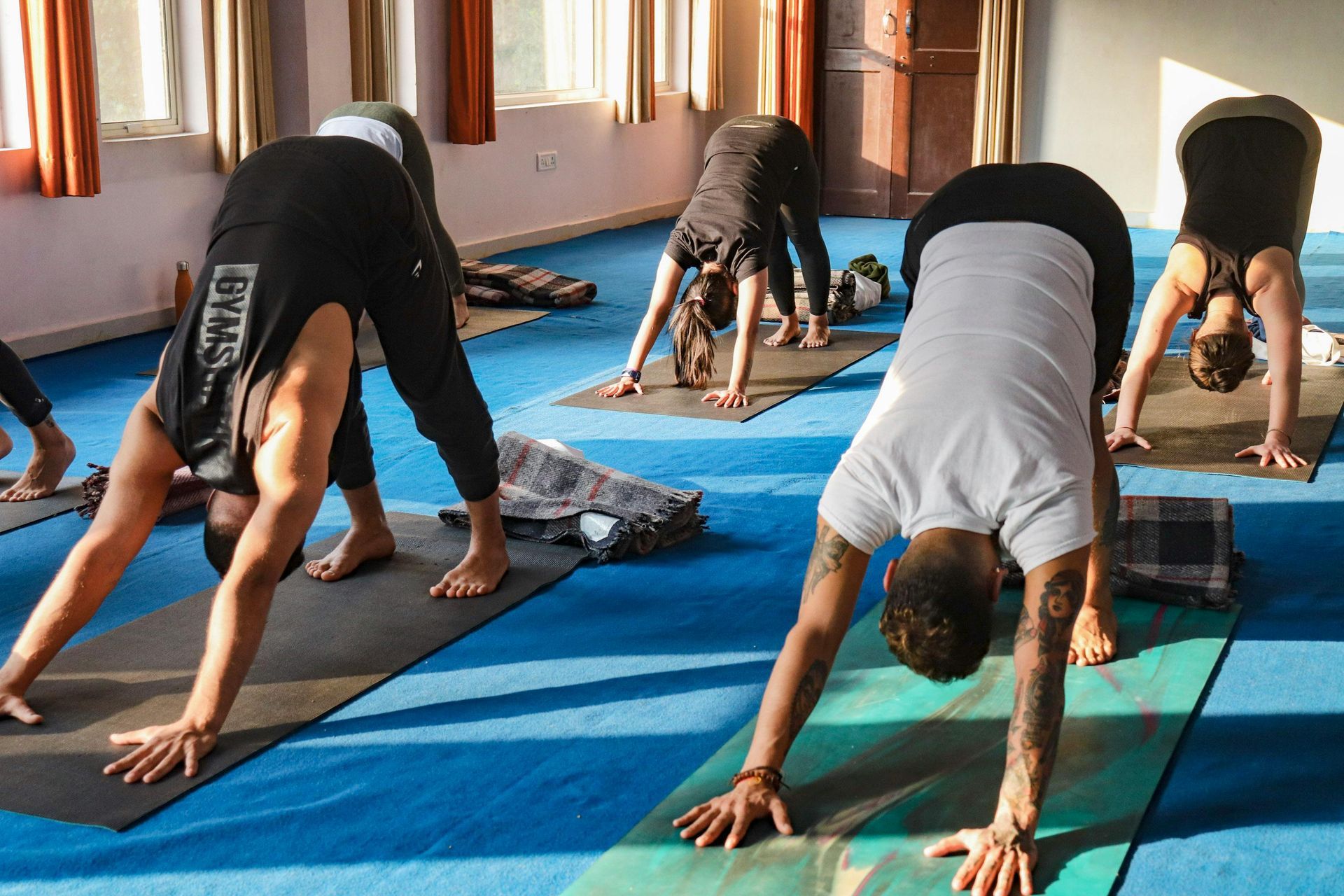
Surya Namascar to the New Year
9th January 27 9:30am - 1pm Central Methodist Hall Manchester £35
Surya Namascar begins all of the Ashtanga sequences and is the backbone of the practice. All of the linking vinyasa sequences are based on the sun salutations.
And you thought they were just a warm up !!
Well, they do make a good warm up and they are a good gauge of how you might be feeling on any given day, but they are much more than this.
Most modern yoga practices have a variation of the Sun salutation, But originally it wasn’t anything to do with asana.
Surya Namascar welcomes the sun. Humankind over the millennia recognised that the sun gives us light and heat and is what keeps the planet alive, without the sun we cannot grow plants for food, shade and shelter.
So from ancient times humans have given gratitude to the sun for rising every day.
This workshop looks at a brief history of the sun salutation, from it’s ancient roots as a mantra through to it’s modern use at the start of a yoga practice.
Your Teacher
Donna is authorised by Manju Jois to teach both the Primary and Intermediate Series of Ashtanga Yoga.
I was honoured to be offered this authorisation by Manju in 2016.
I currently practise a blend of Primary, Intermediate, and the early stages of Third Series.
Ashtanga has been my daily practice since 1998, when I learned it from my teacher Rolf Naujokat in Goa.
I took a teacher training with David Swenson in 2012 and John Scott in 2014
Recently I have been studying with Svastha Yoga, the original yoga method as taught by Krishnamacharya which goes to the roots of the Ashtanga method, and I weave in these teachings to my classes.
I teach in the traditional way that I learned, while adapting the practice to each student’s age, ability, and individual needs.
I am not fundamentalist in the way I teach. You will not be held at the "Gateway" poses for years.
As long as you can breathe freely and deeply in the postures and remember names and what comes next I will move you on.
Mysore Self Practice Classes
Ashtanga Yoga is traditionally taught as a self practice, as taught in Mysore India.
In Mysore classes, you learn the sequence gradually, posture by posture, making it the ideal all‑levels approach.
This makes it suitable for everyone, especially beginners because it allows you to build strength and stamina as you go.
Often described as a 1:1 class in a group setting, you get individual attention when needed.
Connect Breath to Movement
Every sequence begins with Sun Salutations and standing postures to build strength, stability and flexibility.
You then move into your chosen series and finish with backbends and inversions.
The practice follows a one‑breath‑one‑movement rhythm, supported by smooth, calm, steady breathing.
You choose how much you want to practice, dependant on how you feel on any given day.
A Practice for Life
Because you make the practice your own, Once learned, you can change what you do from day to day.
The series' give you a framework from which to start, and you work within this framework, adapting your practice to suit the different transitions of your life.
This way you can do small chunks of postures when you have time, instead of feeling like you have to spend an hour every day.
So you dont feel overwhelmed and do nothing!
A Beautiful Practice
With time and dedication, Ashtanga becomes an inward journey that supports you through every stage of your life. You repeat the same postures daily, yet your body and mind feel different each time. Over time, you notice your patterns — and eventually, those patterns begin to shift, both on and off the mat.
Practiced mindfully, Ashtanga is grounding and helps to regulate the nervous system. The Self practice method is the traditional way of learning Ashtanga yoga.